AeroMarine Research

Aerodynamic and Hydrodynamic Performance
design software for Powerboats

Performance Boat design and setup secrets for Recreational tunnels, Offshore Cats, Racing tunnels, Fishing/Utility hulls, Vee and Vee-Pad Hulls, Bass Boats
Home     New     About Us     Technical Articles      TBPNews Archives     FREE Downloads     Research     Contact Us
Testimonials      Reviews      Join TBPNews       Advertise       Search       Buy Now          

AR© advanced Dynamic LATERAL STABILITY analysis for Vee hull and Tunnel hull performance optimization.
Get complete article by email request:     Share:
Updated: Jun 18, 2026  
BREAKTHROUGH!

Lateral Stabilty in Powerboats

Lateral Stabilty in Powerboats

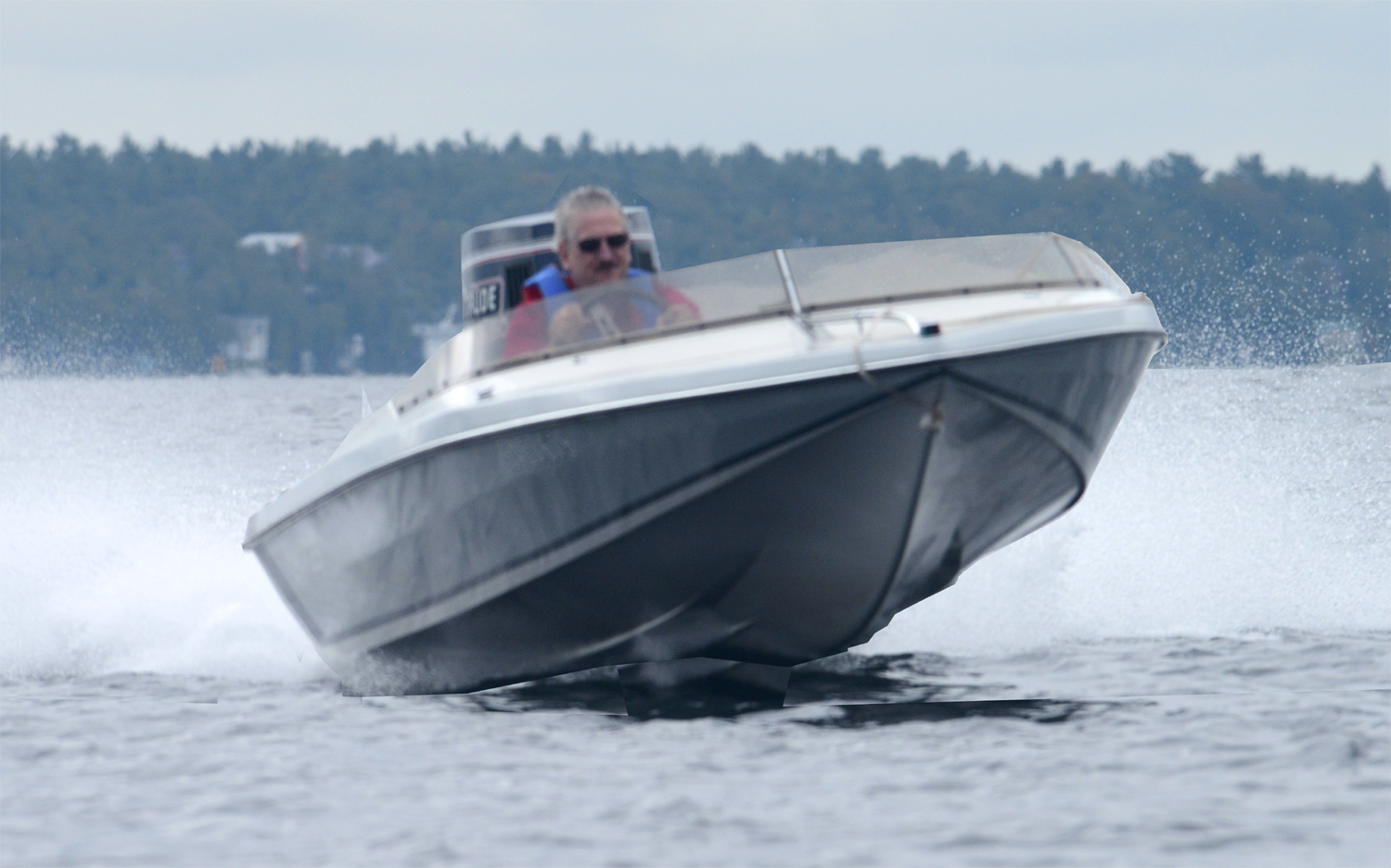
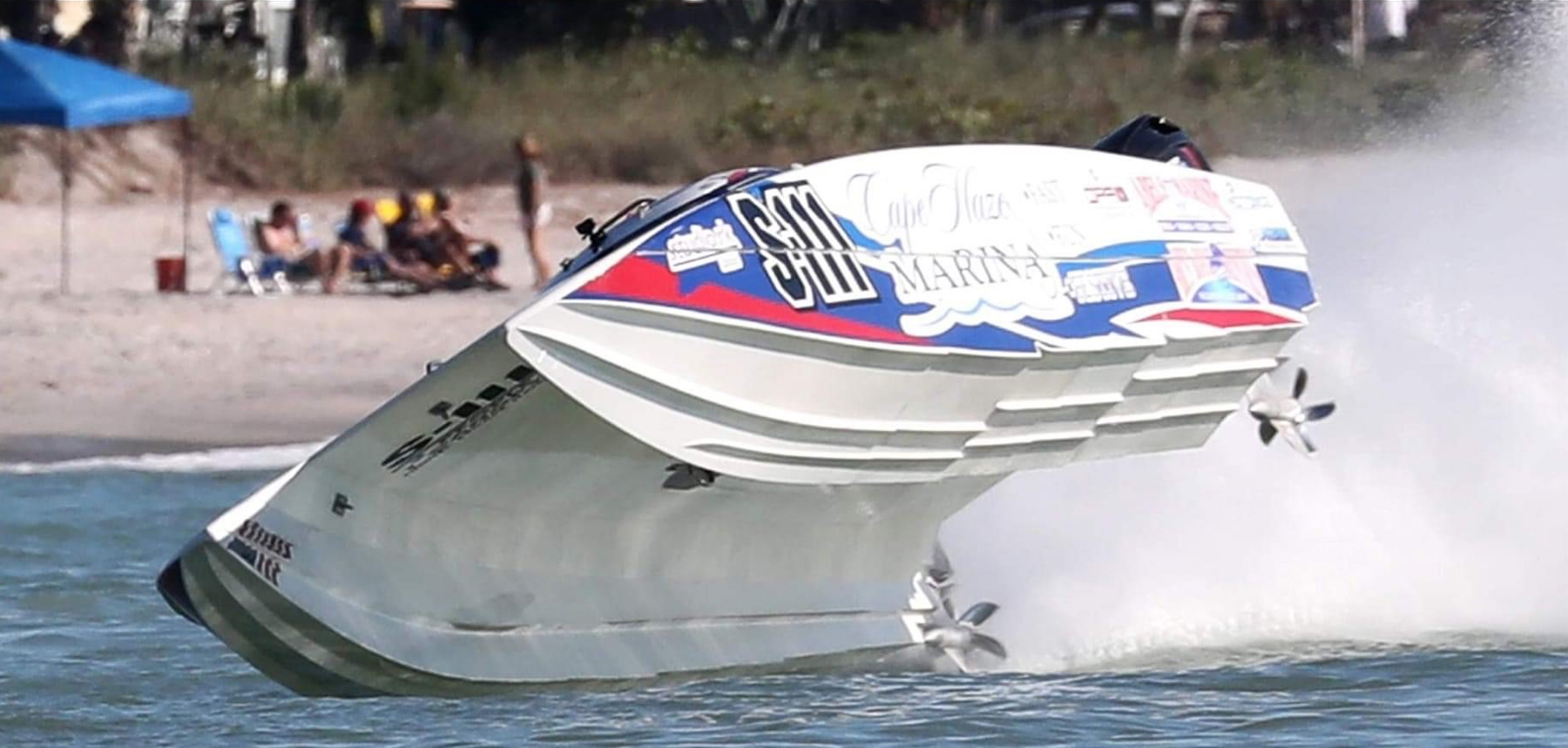
Figure 1 - Lateral Instability can trigger the onset
of 'Chine-Walk' at a predictable velocity.


Lateral Stability in Powerboats

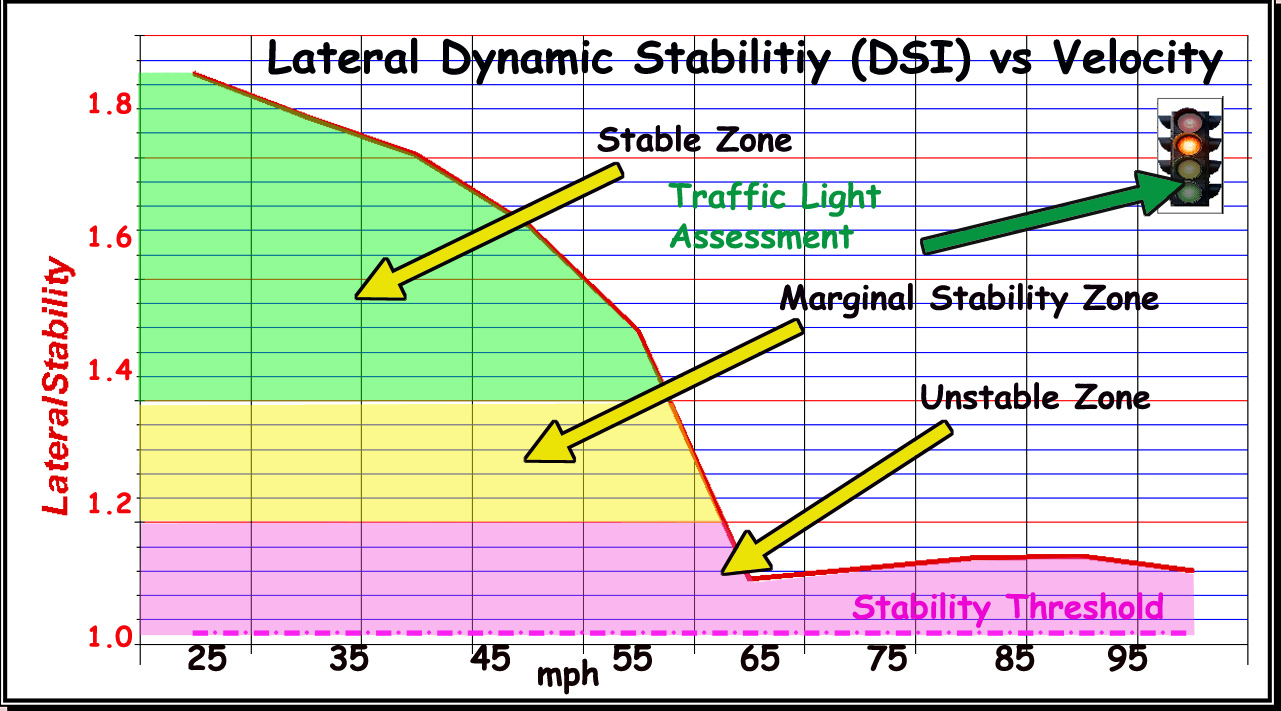
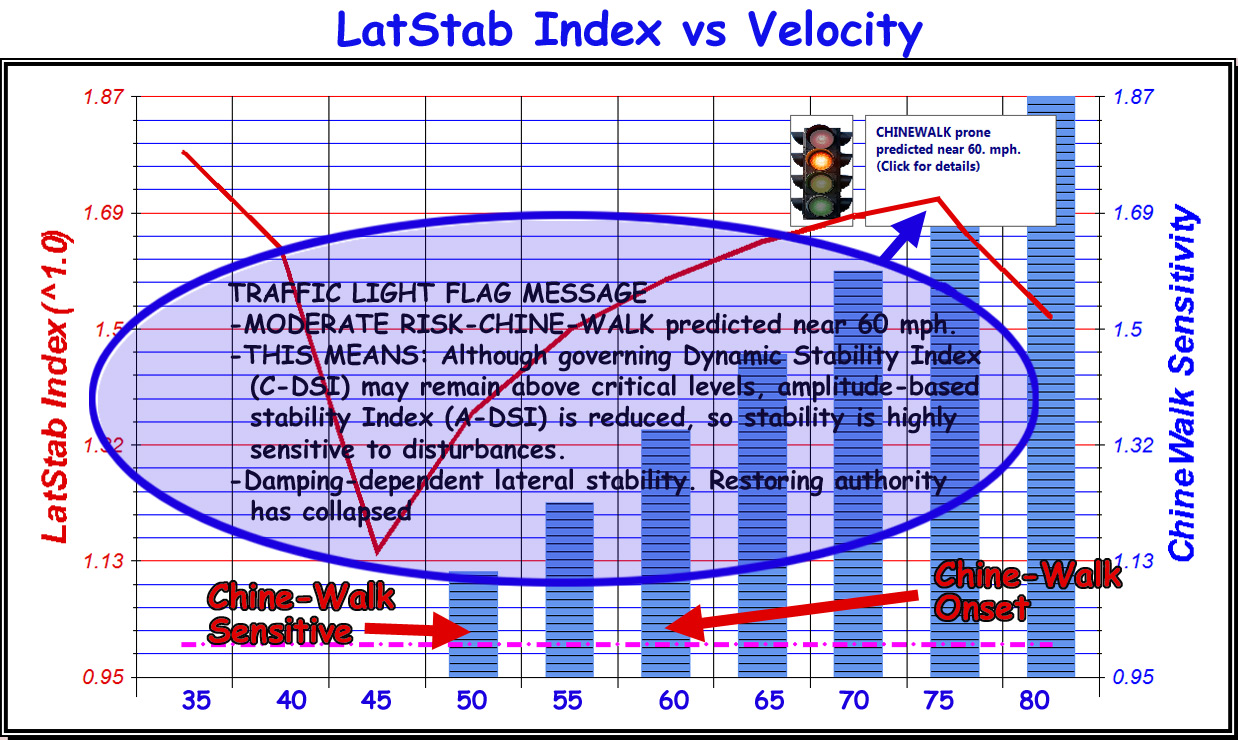
Figure 2 – Easy to identify safe Dynamic Lateral Stability (DSI) regions of stability:
a) DSI > 1.2 = Good stability; well-damped roll response.  
b) 1 ≤ DSI ≤ 1.2 = Marginal stability; hull sensitive but controllable.  
c) DSI < 1 = Poor dynamic stability; risk of oscillatory or divergent roll behavior; onset of chine-walk, track rolling, hook.
Lateral Stability in Powerboats
Figure 2a –

TRAFFIC LIGHT Indicator shows quick signal of Stability Assessment.
AND...
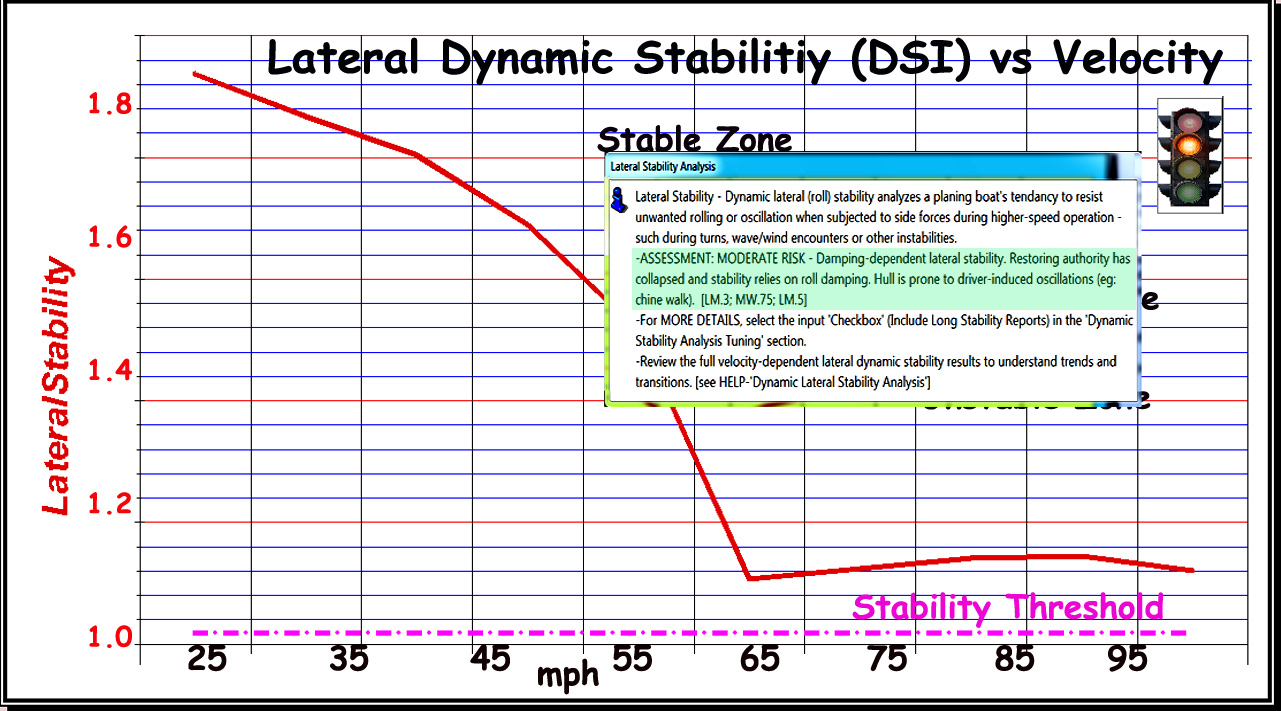
Summary Stability ASSESSMENT message by clicking on the Traffic Light indicator
AND...
Even MORE Stability details in the
"Performance Analysis Report Wizard

Lateral Stabliity in powerboats

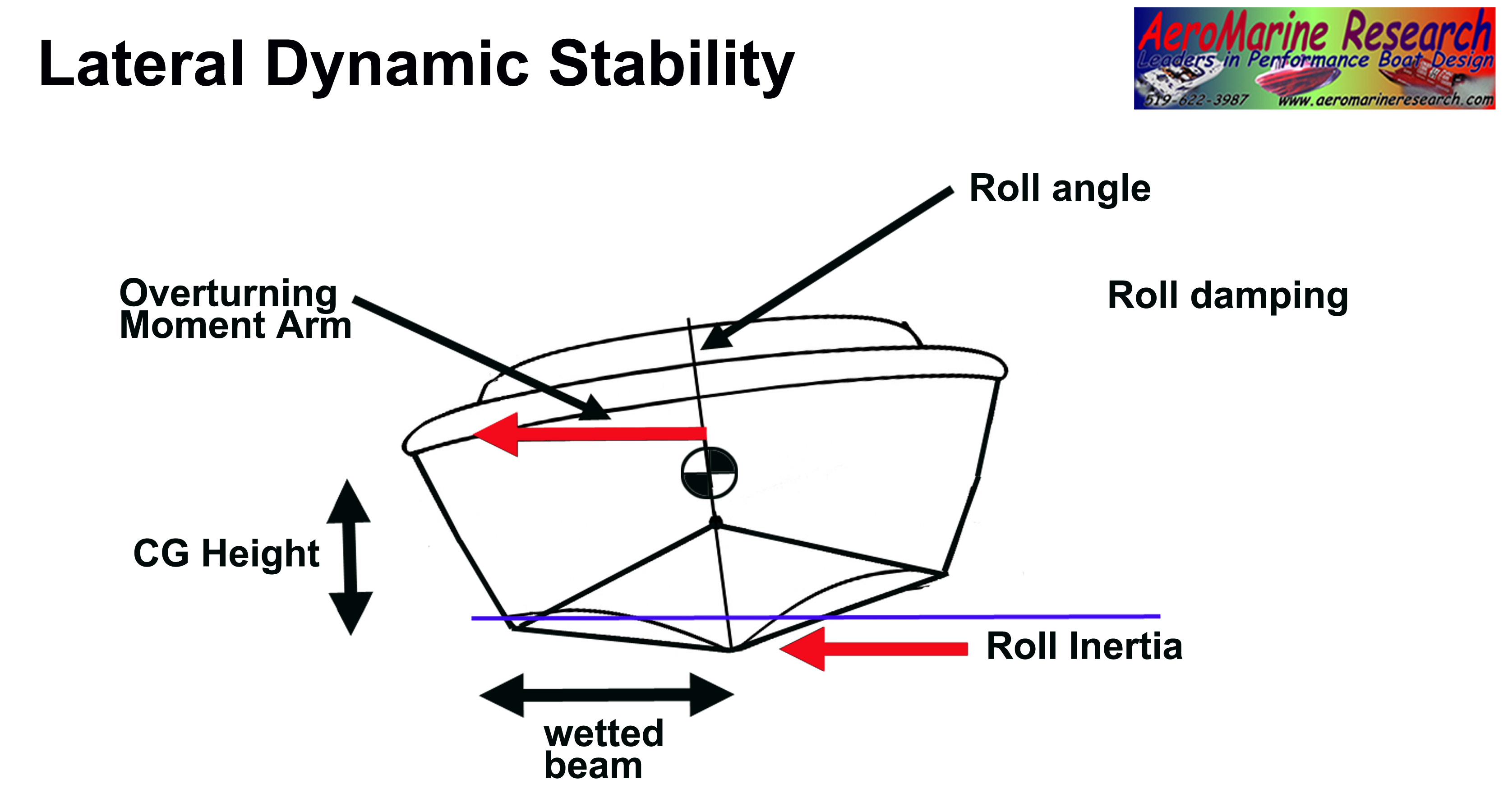
Figure 3 – Lateral Instability with low roll damping and/or roll stiffness means limited roll resistance or recovery from inertial roll tendencies - ultimate result can be 'roll-over'.

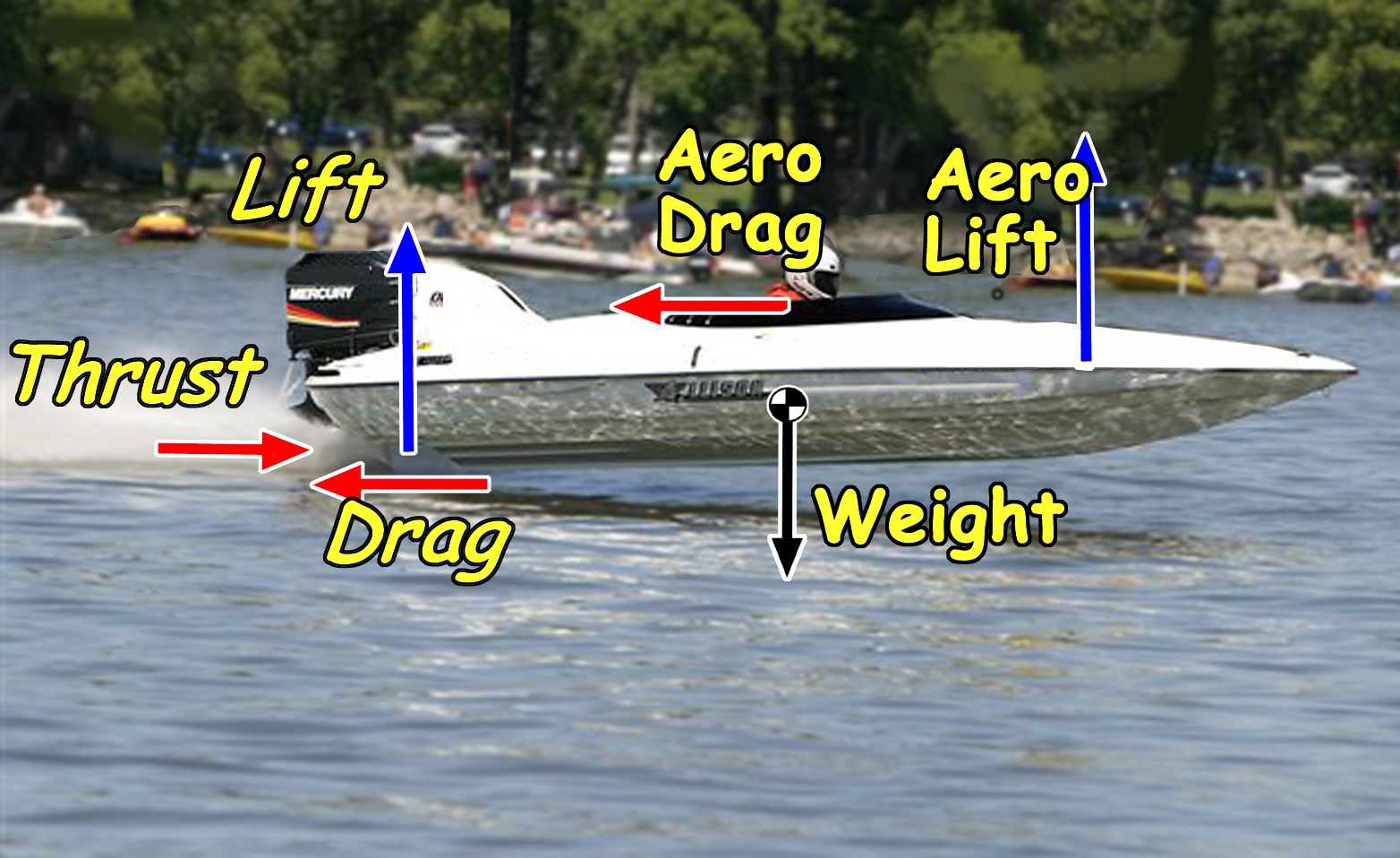
Aerodynamic and Hydrodynamic forces

Figure 4 - Hydrodynamic forces acting close to or far from hull center-line can influence hull tendency to resist roll or to damp roll.  Hull transition to Lift generated by centrally located 'Vee Pad" or tunnel "center pod" can influence Lateral Instability at higher velocities.


[see video "Lateral Stability analysis" with  VBDP©]


Advanced analysis of Dynamic Lateral Stability gives effective prediction for vee hulls and tunnel hulls. Predicts onset of chine walk, track rolling, turn hook, bow steer, more.

AR® Lateral Stability Analysis predicts onset of instabilities including chine-walk, track-rolling, hook, roll-over, and more.

Lateral instability in high-speed planing hulls is a dynamic phenomenon that cannot be reliably predicted using static equilibrium methods or isolated numerical simulations. Many hulls that appear 'stable' by traditional criteria actually exhibit growing roll oscillations, chine walk, or loss of control as speed increases. This occurs because real stability depends on how roll energy is stored, dissipated, and restored over time - not simply on whether restoring moments exist at a given condition.


How To Evaluate LatStab Index:

The Dynamic Stability Index (DSI) uses a unified rating scale to predict how a hull will behave under real-world operating conditions.


Greater value is better. DSI > 1 is more stable, DSI < 1 less stable. [see Graph #69, DSI>1 is better].

  • GOOD: DSI > 1.2 → Good dynamic stability; hull exhibits well-damped roll response.

  • MARGINAL: 1 ≤ DSI ≤ 1.2 → Marginal stability; hull may feel sensitive but remains controllable.

  • UNSTABLE: DSI < 1 → Poor dynamic stability; risk of oscillatory or divergent roll behavior; onset of chine-walk, track rolling, hook.

NOTE: Stability indicator results are not ONLY value-based, see the 'trend-based' ASSESSMENT provided in 'Performance Summary Report' and the 'TRAFFIC LIGHT' symbol on this graph. CLICK on 'TRAFFIC LIGHT' symbol for DETAILED STABILITY REPORT. 


Read on for explanation of these analytical indicators...


Advanced Methodology
The presented (AR®) analysis technique introduces a dynamic, energy-based method for evaluating lateral stability across the full operating speed range. Developed through extensive hydrodynamic research, modeling and full-scale testing, it captures the complex interactions of roll forces, damping, geometry, and pressure fields within a single, unified framework. 

By separating Restoring Authority from Damping Effectiveness and identifying which physical mechanism governs stability at each speed, the method accurately predicts instability onset before it manifests on the water. Implemented within TBDP/VBDP software, the approach provides designers with a practical, physics-based tool to assess real-world handling behavior and apply targeted design corrections early in the design process.

TBDP©/VBDP© Lateral Stability Analysis even accounts for dynamically changing damping effects of vee-pads, center-pods, multiple Lifting Strakes, etc.

"This new dynamic lateral stability analysis by AeroMarine Research delivers a major step forward in predicting a boat’s true stability behavior across all speeds, from the first moments of planing to the highest performance speed ranges.  Despite the depth and sophistication of the method, the resulting 'Dynamic Stability Index' makes it amazingly easy for users to assess stability quickly and confidently." [PBDesign magazine, Dec 2025]


Making it Easy:
TBDP©/VBDP© presents a reporting format that makes the results and recommendations easy to understand...


TBDP©/VBDP© presents a full range of reporting information that makes the results and recommendations easy to understand.


For each of the Stability measures, the software does ALL the work behind the scenes, and gives both DETAILS and also gives the 'GOOD/NO GOOD' summary of all considerations.  [Check out 'Easy Results View' here]


What Is Lateral Dynamic Stability?
Lateral dynamic stability describes a hull’s ability to resist growing roll motion when subjected to small disturbances such as waves, steering inputs, or asymmetric lift. A hull is laterally stable if these disturbances decay with time, and unstable if they grow from cycle to cycle. Therefore, lateral stability cannot be determined solely by static equilibrium.


Consequently, lateral dynamic stability cannot be fully characterized by static equilibrium methods alone. While a hull may possess positive geometric restoring stiffness at rest, it can exhibit dynamic instability at high velocities if hydrodynamic roll energy amplification exceeds the system's damping capacity. This physical threshold marks the onset of non-linear roll oscillations, commonly known as 'chine walking'.


Dynamic lateral stability is governed by three interacting factors: ·

  • how much roll energy is generated by disturbances,

  • how effectively that energy is dissipated each cycle,

  • how strongly the hull restores itself as heel develops.

Understanding stability therefore requires evaluating motion over time, as well as forces at equilibrium.


Why Traditional Methods Fall Short

  • Savitsky-Based Analysis - Savitsky theory evaluates planing hull behavior using static equilibrium of forces and moments. Lateral stability is inferred from restoring stiffness and lift distribution at individual operating points, implicitly assuming that roll disturbances decay naturally. Roll inertia, energy persistence, and speed-dependent amplification mechanisms are not modeled. As a result, Savitsky-based methods cannot predict when or why lateral instability will develop as speed increases.

  • CFD Software Analysis - CFD software tools provide detailed pressure and force distributions at specific speeds, but these results are typically isolated snapshots . They do not dynamically evaluate whether roll motion grows or decays over successive cycles, nor do they efficiently capture regime transitions across a speed range. Even 'high-end' add-ons for CFD software are computationally expensive and often fail to translate directly into real-world handling predictions.

A Dynamic Energy-Based Stability Framework

This presented (AR®) method treats lateral stability as a dynamic energy balance problem. Instead of simply testing whether restoring forces exist, it evaluates whether roll energy introduced by disturbances is removed faster than it accumulates. Two complementary stability mechanisms are both necessarily evaluated: · 

  • A-DSI (Amplitude-Limited Stability Index) - measures the hull’s inherent restoring authority and ability to resist and limit roll motion as heel amplitude increases. This is an advanced modeling indicator (developed by AR®) that more accurately represents higher velocity stability behaviors. This indicator represents a hull's dynamic 'Restoring Authority' - the hull’s ability to generate corrective roll moments as heel amplitude develops - or 'how strongly the hull shape itself pushes back against rolling as it leans'.  It reflects hull geometry, lift distribution, and effective roll leverage.

  • C-DSI (Cycle-Limited Stability Index). - based on the classical damping-based stability formulation traditionally used for planing hull stability assessment and is most representative when damping mechanisms dominate the stability response.  This indicator measures how effectively the hull dissipates roll energy over time instead of allowing oscillations to build  It captures the combined influence of roll inertia, hydrodynamic damping, and flow interaction.  

Both mechanisms are evaluated continuously across the operating speed range.

Dynamic Regime Identification (Λ)

The Dynamic Regime Indicator, Lambda (Λ), identifies which physical mechanism governs stability at each operating condition by comparing available restoring leverage to overturning leverage. Lambda determines whether stability is governed primarily by restoring authority (A-DSI) or damping effectiveness (C-DSI).

The AR® analysis technique evaluates all of the conditions:

  • Λ > 1 — Restoring Authority-Dominated Regime (A-DSI) - Restoring authority controls stability. Geometry and lateral lift engagement are the primary stabilizing mechanisms.

  • Λ < 1 — Damping-Dominated Regime (C-DSI) - Stability depends primarily on energy dissipation. Roll inertia and lift concentration dominate, and instability onset becomes more likely.

  • Transitional Regime (A-DSI and C-DSI) Both mechanisms contribute. Stability is highly sensitive to speed, trim, and loading, and small design changes can have large effects.

This regime awareness is extremely helpful to the designer because it explains not just whether a hull is unstable, but why.


Instability Onset and Trend Indicators

Instability is identified through trends across speed, rather than just single-point thresholds. Our research and real-world testing has proven that many conditions must be evaluated simultaneously in order to accurately identify hull stability state.  Key indicators considered include:

  • declining governing stability margin with increasing speed;

  • peak-and-decline behavior in restoring authority,

  • divergence between damping-based and restoring-based stability measures,

  • persistent warning conditions across adjacent speeds,

  • transitions into damping-dominated regimes,

  • normalized values of dynamic energy-based Stability Indicators.

These indicators allow instability to be detected before loss of control occurs, aligning closely with observed real-world behavior.


Design Interpretation and Corrective Insight

Because the governing stability mechanism is explicitly identified, designers are not left guessing how to respond. The analysis distinguishes between instability driven by insufficient restoring leverage and instability driven by excessive inertia or lift concentration. This enables targeted corrective design actions such as modifying lateral support geometry, redistributing lift engagement, or reducing roll inertia, rather than relying on trial-and-error tuning or forcing operational restrictions.

Why This Predicts Real-World Behavior

Savitsky-based methods answer the question: Can the hull support itself? CFD software quickie-snapshots can only answer: What forces exist at this speed?

Our presented (AR®) analysis answers the questions that matter most to real-world designers and operators: Will lateral motion decay or grow as speed increases? - and what design feature controls that outcome?

By evaluating stability dynamically across the speed path, the method predicts handling behavior observed in real-world boats, not just theoretical equilibrium. 


Implementation in TBDP©/VBDP©

This advanced dynamic lateral stability analysis is fully integrated into TBDP©/VBDP© software. Designers can evaluate stability trends, identify governing mechanisms, and assess corrective design changes rapidly and consistently within the hull design workflow - without the computational burden of CFD or the limitations of static theory.  


Analysis Advancement

Lateral instability is a dynamic phenomenon driven by energy behavior, not static balance. Traditional methods cannot predict instability onset because they do not evaluate motion growth over time. By separating Restoring Authority from Damping Effectiveness and identifying the governing Regime across speed, this AR® method provides a practical, research-grade solution for predicting real-world high-speed hull stability.


How it Works...

For a vee hull with vee-pad (high-lifting pad), as planing velocities increase, the hull transitions its lifting load from the primary deadrise surfaces to the localized geometry of the Vee-Pad. This drastic reduction in wetted beam significantly diminishes the hull's geometric restoring stiffness. At this operating point, the system's stability becomes heavily reliant on hydrodynamic and aerodynamic roll damping rather than static water plane inertia.

At low speeds near the planing threshold, stability is typically governed by restoring authority (A-DSI). As speed increases, hydrodynamic damping generally improves and stability margins often increase. At very high speeds, increasing aerodynamic lift and reduced wetted support can diminish both restoring leverage and damping effectiveness, causing stability margins to decline.


How we detect Chine-Walk sensitivity...

Lambda, A-DSI, and C-DSI describe different aspects of lateral stability in high-speed planing hulls. Lambda represents restoring leverage from hull geometry and weight distribution, indicating how strongly the hull tends to self-right in roll. A-DSI represents the available restoring stability margin relative to a minimum required level, showing how much restoring authority remains as conditions change. C-DSI represents the available damping capacity relative to roll inertia and loading, indicating how effectively roll motion is suppressed. Lambda determines which of these two mechanisms is governing the stability response.


Chine walk is the condition where restoring leverage (Lambda) is weakened, the restoring stability margin (A-DSI) is reduced, and damping capacity (C-DSI) is no longer sufficient to suppress alternating roll oscillations. So, the hull is no longer primarily self-stabilizing through restoring geometry, and is instead relying on damping to maintain roll control - but damping is insufficient relative to demand.


What to do about it:
When a hull is operating in the Lateral Stability "Unstable Zone", you may consider changing design/setup features that are known to cause dynamic lateral instability:

  • Reduce weight

  • Broaden wetted surfaces, increase outboard wetted areas

  • Lower CG heights such as engine, seats, cockpit items, or fuel/water tanks

  • Centralize heavy items to reduce beamwise spread of weight

  • Reduce lift contribution of Vee-Pad or Tunnel hull center-pod

  • Reduce speed, Trim down.

Note: Some features that increase stability (wider wetted area, more damping, etc) can also increase drag, change top speed and fuel use. There is always a trade between ultimate top speed/agility and benign handling.


Research results now included in performance analysis by TBDP©/VBDP©

[more about AR's research     more about AR's publications    and    technical articles/papers]
 

jim2.jpg secrets_of_tunnel_boat_desi.gif

about Jim Russell

"Secrets of Tunnel Boat Design - Second Edition"
book
 "Secrets of Propeller Design" book

"TBDP Version 8" Software "VBDP Version 8" Software "PropWorks2" software

Order with your Shopping Cart
Special pricing updated June 18, 2026
Contact us at:
AeroMarine Research®
67 Highland Crescent, Cambridge, ON, Canada, N1S1M1
Tel: 519-240-7959

©Copyright by AeroMarine Research and Jim Russell, 1999, all rights reserved.
Material from this website may be not copied or used or redistributed, in whole or in part, without specific written consent of Jim Russell or AeroMarine Research®.