AeroMarine Research

Aerodynamic and Hydrodynamic Performance
design for Powerboats

Performance Boat design and setup secrets for Recreational tunnels, Offshore Cats, Racing tunnels, Fishing/Utility hulls, Vee and Vee-Pad Hulls, Bass Boats
Home     New     About Us     Technical Articles      TBPNews Archives     FREE Downloads     Research     Contact Us
Testimonials      Reviews      Join TBPNews       Advertise       Search       Buy Now          

BREAKTHROUGH!
AR© advanced Dynamic Stability (longitudinal) analysis for Vee hull and Tunnel hull performance optimization.
Get complete article by email request:     Share:
Updated: Feb 15, 2026  
BREAKTHROUGH!
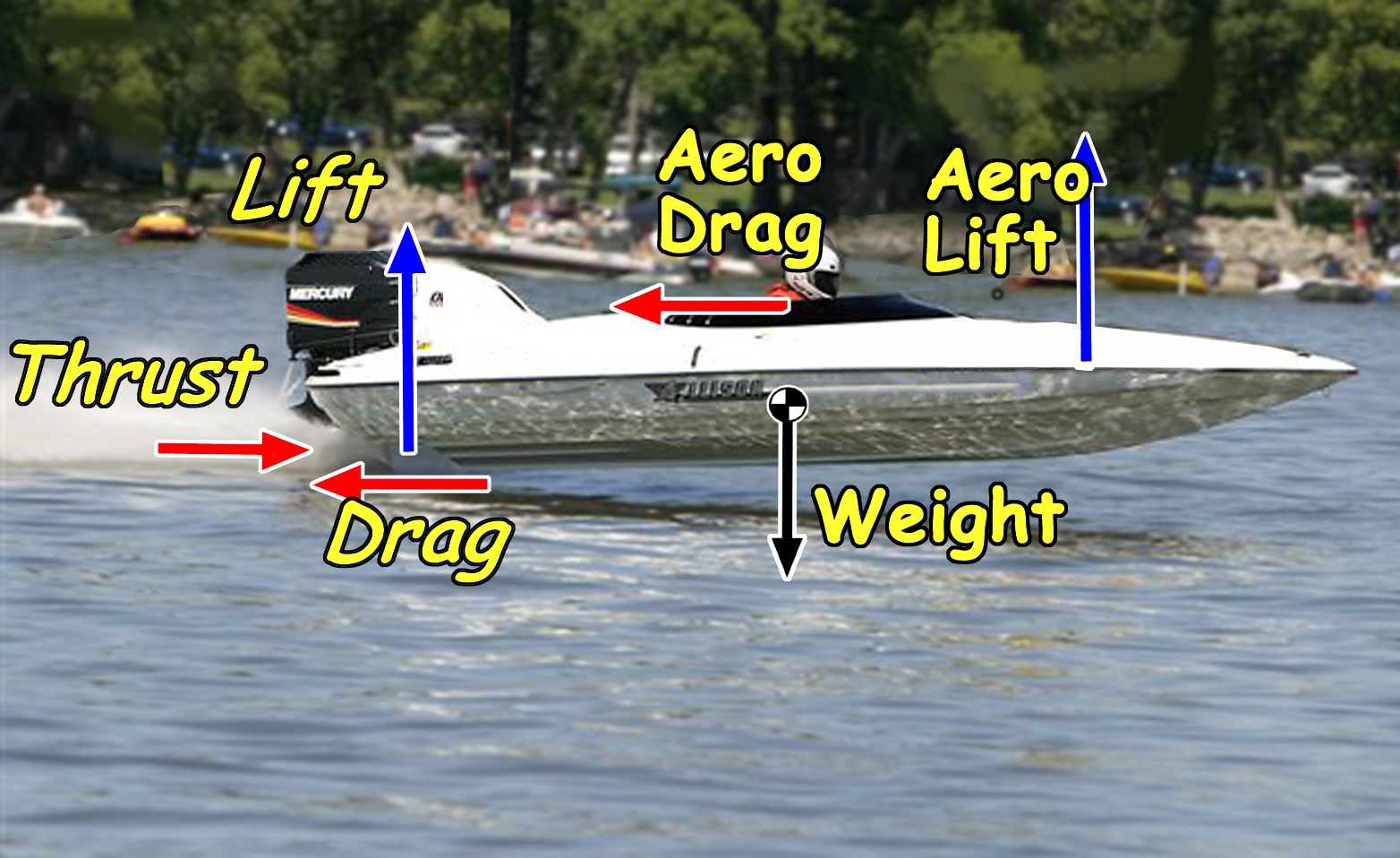
Aerodynamic and Hydrodynamic forces
Figure 1 - Aerodynamic and Hydrodynamic forces combine to balance the hull; and it is a different balance at every velocity.


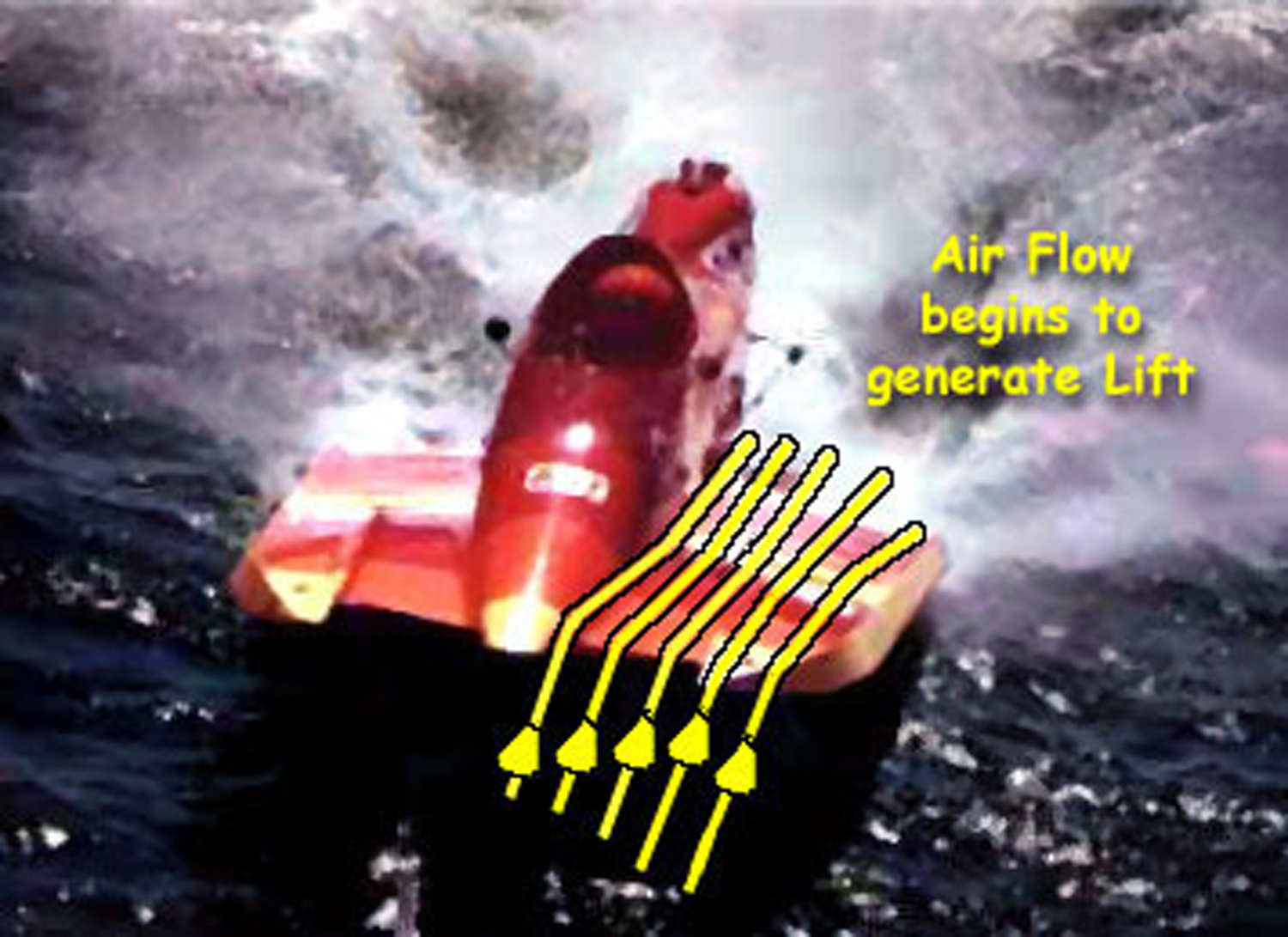
Figure 2 – Tunnel hulls see a unique balance between aerodynamic Lift generated by the deck and or tunnel configuration, and the hydrodynamic Lift generated by the sponson surfaces.


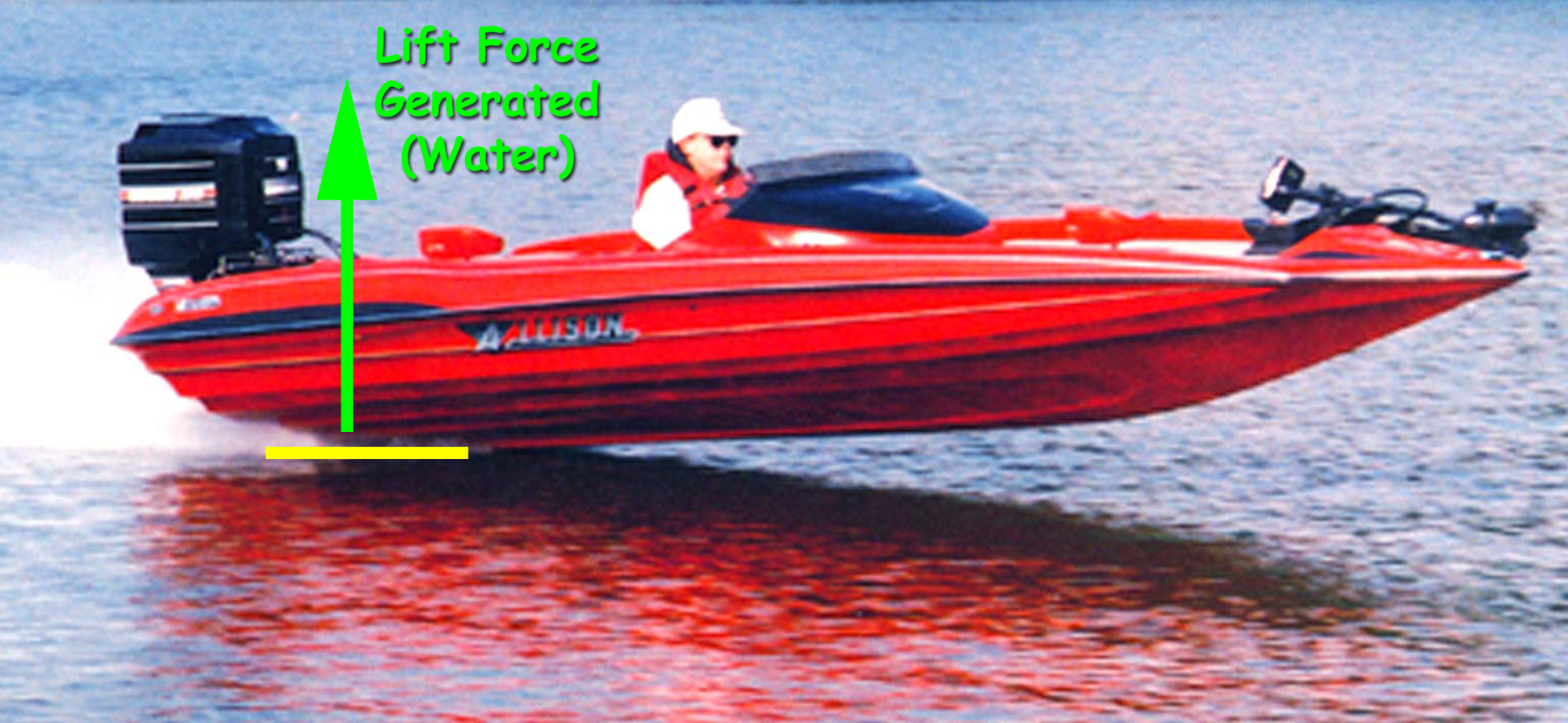
Figure 3 – Vee-pad hulls transition to significant Lift generated by highly efficient aftward “pad” at higher velocities.


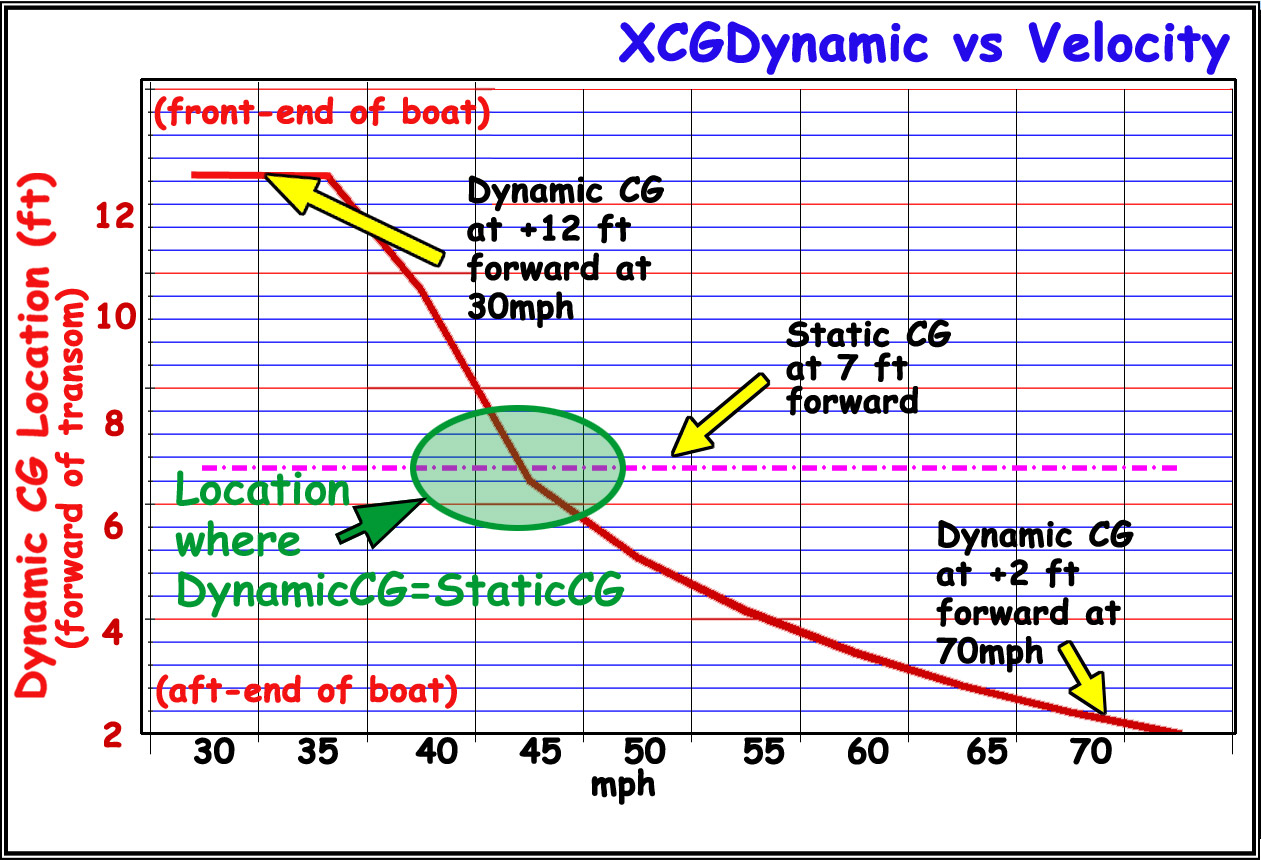
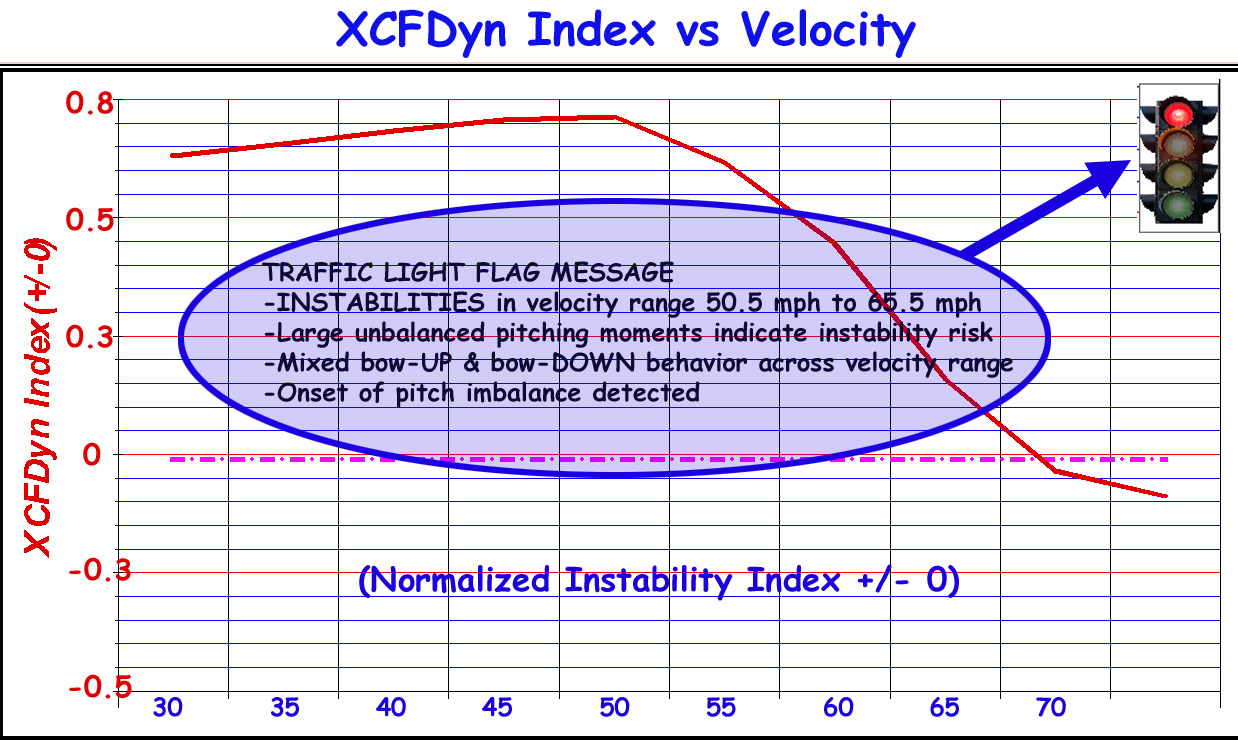
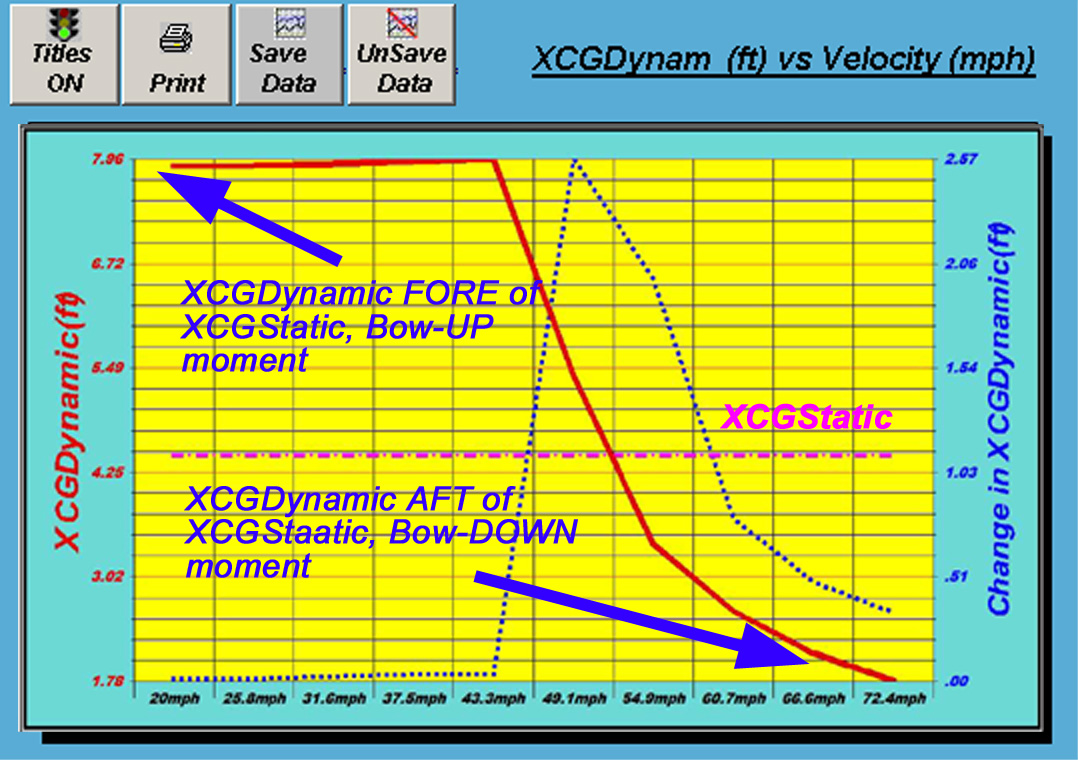
Figure 4 - TBDP/VBDP analysis of Dynamic Stability shows changing location of XCFDynamic, related to static CG, indicating more stable/less stable dynamic stable sensitivity, through full operating velocity range.


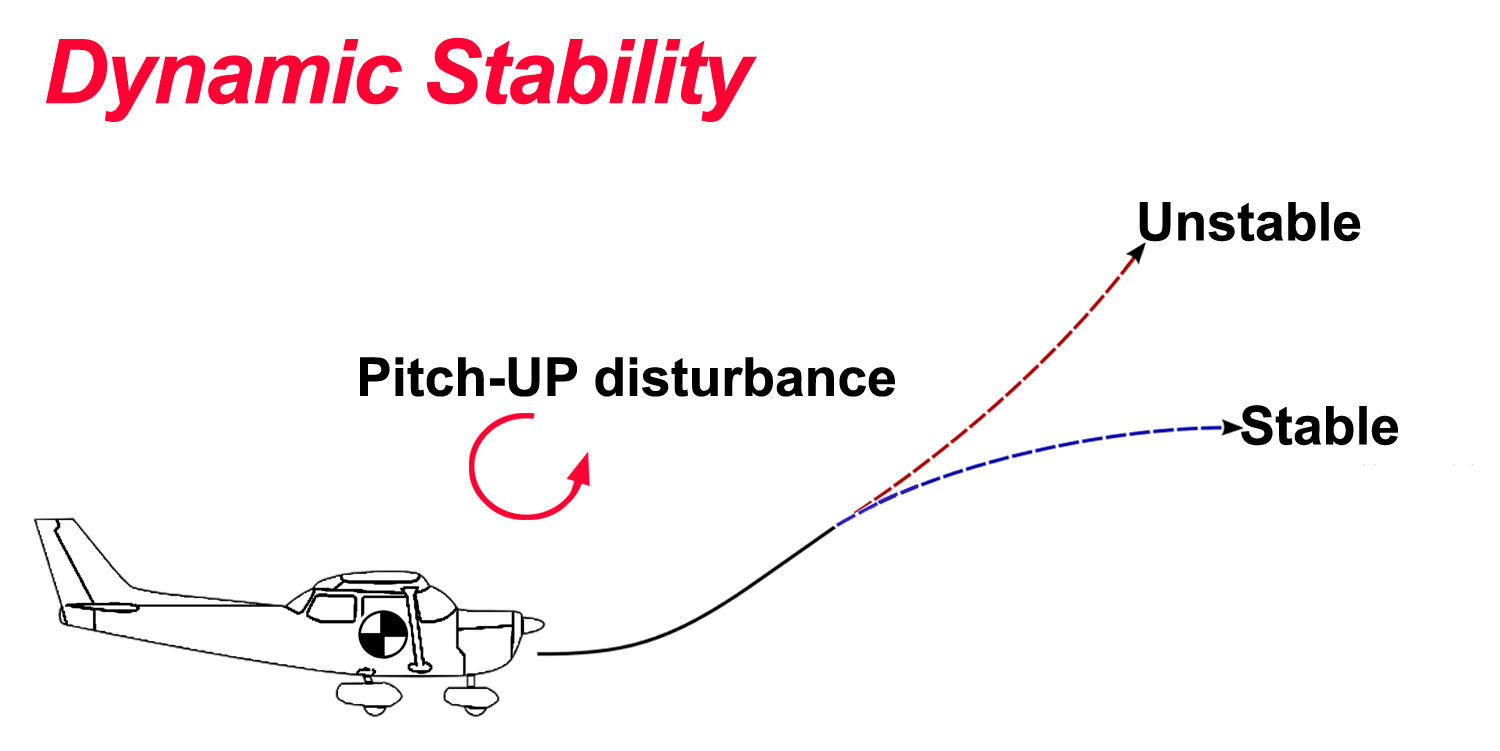
Figure 5 – An airplane is 'inherently stable', since a slight raising of the nose results in a self-correcting nose-down moment.


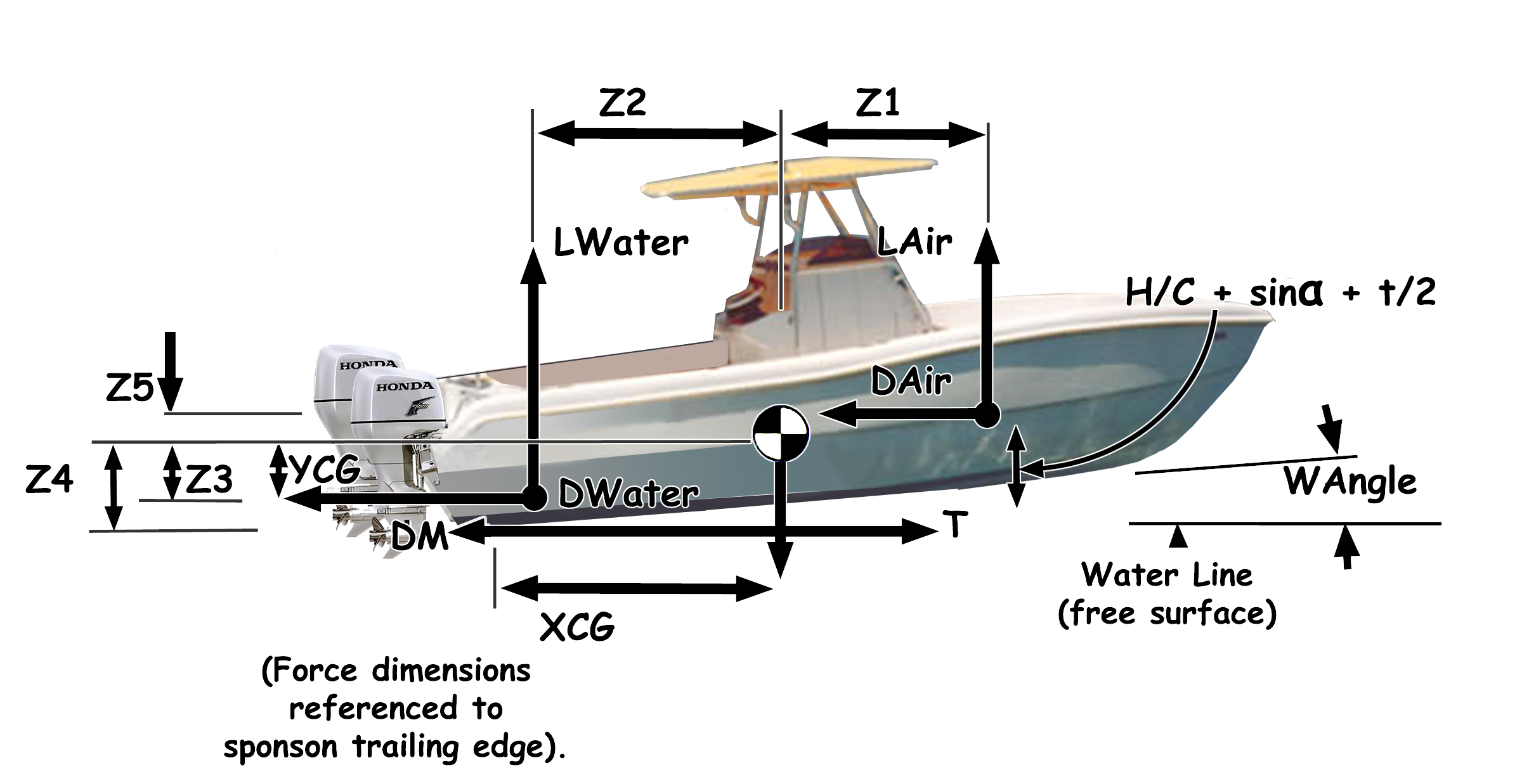
Figure 6 – All boats are treated the same methods for analysis and balance of static and dynamic forces. 


Advanced analysis of the changing hydrodynamic and aerodynamic forces acting on tunnel hulls and vee hulls gives highly accurate dynamic stability, performance predictions & optimization.

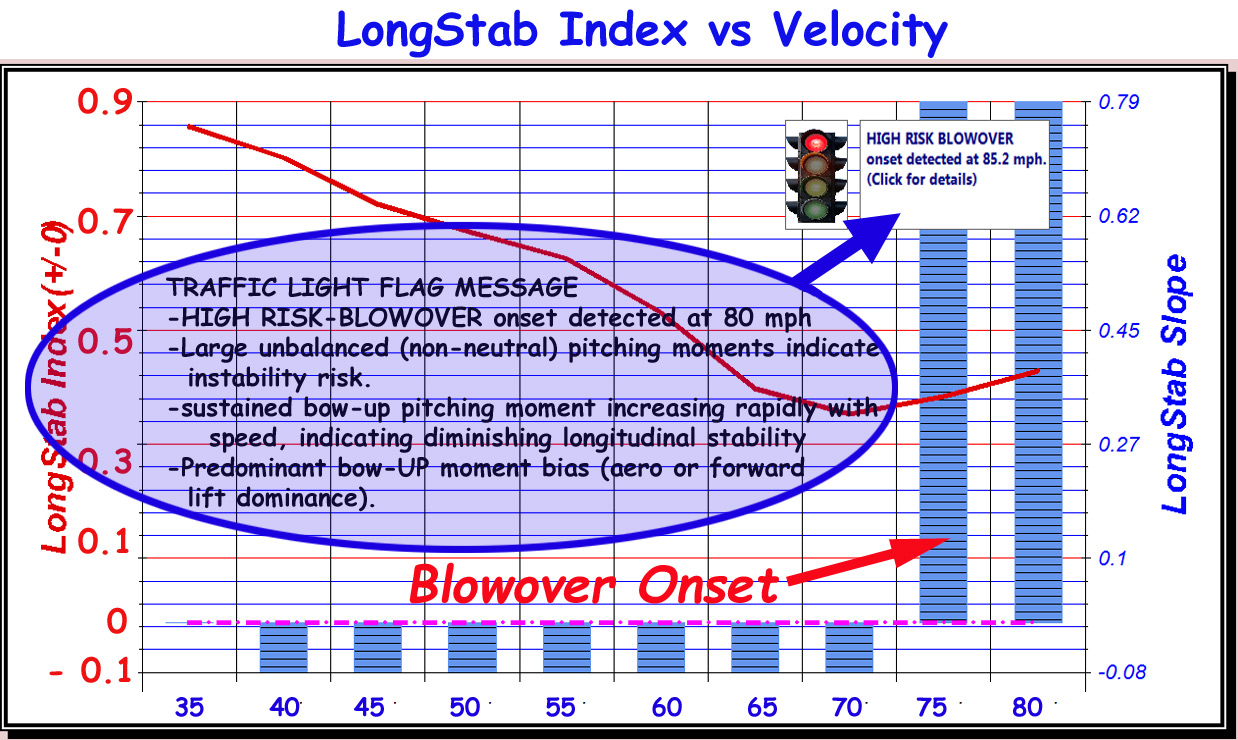
TBDP/VBDP Longitudinal Stability Analysis predicts onset of insabilities including nose-dive (stuffing), bow-steer, bow-trip, bow-raise, high bow lift or blow-over, and more.


Pitch Stability Beyond Trim Equilibrium
Traditional trim analysis determines the equilibrium trim angle of a planing hull at each speed. While necessary, equilibrium trim alone does not indicate whether the hull will naturally resist pitch disturbances or whether small changes in speed, trim, or loading may lead to persistent imbalance or instability.


The Dynamic Longitudinal Stability analysis developed by AeroMarine Research evaluates the restoring quality of the longitudinal force balance across speed. It identifies operating regions where pitch stability margins are strong, weak, or changing, providing designers with insight that conventional trim solvers do not supply.


Making it Easy:
While stability analysis is complex, TBDP©/VBDP© presents a reporting format that makes Results and Recommendations easy to understand...


TBDP©/VBDP© presents a full range of reporting information that makes the results and recommendations easy to understand.


For each of the Stability measures, the software does ALL the work behind the scenes, and gives both DETAILS and also gives the 'GOOD/NO GOOD' summary of all considerations.  [Check out 'Easy Results View' here]


Why Static hull 'balance' doesn't help...
The 'Static CG' of a hull is the location of balance of the hull, appendage and payload deadweights while boat is at rest. But this is a small part of the important balance of a performance hull - particularly since the performance boat usually operates at velocities greater than zero!  [check out article here]


The combined center of ALL the lift forces and all the drag forces (sponsons, center-pod, vee surfaces, center-pad, aerodynamic surfaces, lower unit, etc.) while a boat is under way, is called the 'Dynamic Center of Forces' or 'xCFDynamic' centroid. The 'xCFDynamic' location changes throughout the operating velocity range and is the most important design measure to consider when 'balancing' a performance boat.


Some situations that can evolve as triggered by dynamic instablity include…

  • Chine Walk

  • Porpoising

  • Blowover

  • Barrel Roll

  • Nose-Dive ('Stuff')

  • Airborne

Note analysis methods apply EQUALLY to all styles, sizes, configurations of hulls, and for all weights, power and velocities - just the same analysis.

How it Works...
Lift = Weight = Performance - All boats must generate enough lift to balance the weight of the hull. Performance tunnel and vee hulls generate lift by hydrodynamic 'planing' surfaces and aerodynamic surfaces. As a boat goes faster it needs less wetted surface to generate it's required Lift – but that Lift is always equal to the weight of the boat – and the Lift always comes with a certain amount of drag.

Core Physical Principle - At any operating speed, a planing hull is acted upon by multiple longitudinal forces, each applied at a different longitudinal location:

  • Hydrodynamic planing lift and drag
  • Propulsive thrust‑line forces
  • Lower‑unit hydrodynamic forces
  • Aerodynamic lift and drag (when applicable)

As speed changes, both the magnitude and the location of these forces change. Stability depends not only on their sum, but on where their combined line of action lies relative to the vessel’s center of gravity (CG).

Tunnel hulls see a unique balance between aerodynamic Lift generated by the deck and or tunnel configuration, and the hydrodynamic Lift generated by the sponson surfaces on the water.

Vee hulls (and Vee-Pad hulls) gain lift from the balance of lift from planing vee surfaces and/or center-pad surfaces and also from aerodynamic surfaces.


Hump Zone
The “hump zone” for a tunnel hull represents the speed at which a more significant amount of Lift changes from sponson lift to aerodynamic lift.

For Vee hulls the "hump zone" transition occurs when a more significant amount of Lift changes from vee surfaces lift to aerodynamic lift and/or vee-pad lift.

This "hump" or "transition zone" occurs at a different velocity with each boat and setup. The change in location of the center of Lift (with increasing velocity) is often quite dramatic and can initiate the onset of potential instabilities - like Porpoising or chinewalking.


We have developed a mathematical method to accurately predict the onset of instability and the point of the 'Hump Zone Transition".


Net Longitudinal Force Centroid (xCFDynamic)
For each speed, the analysis computes xCFDynamic, defined as the longitudinal centroid of all resolved forces acting on the hull: xCFDynamic = net longitudinal location at which the total force system acts This quantity moves with speed as the force balance evolves. The hull’s center of gravity, by contrast, remains fixed (static). The separation between XCFDynamic and the CG is the fundamental indicator of longitudinal pitch stability.


Pitch Stability Index (C_MCG)

To evaluate restoring behavior in a consistent, comparable manner, the force‑centroid offset is normalized to produce a dimensionless pitching moment indicator:

C_MCG = Dimensionless pitching moment coefficient about the CG


C_MCG represents both the direction and relative strength of the net pitching moment...

  • C_MCG > 0 → tendency for bow to rise

  • C_MCG < 0 → tendency for bow to drop

The sign and magnitude of C_MCG indicate whether the hull is naturally restoring or sensitive to disturbances.


Restoring Direction and Stability Meaning
For longitudinal pitch stability, the restoring requirement is:

  • A bow‑up disturbance must generate a bow‑down restoring moment

  • A bow‑down disturbance must generate a bow‑up restoring moment

In this analysis restoring behavior is inferred . When the net moment consistently acts in the restoring direction, the equilibrium trim is stable. When it weakens or changes sign, stability margins are reduced.


Stability Prediction Modeling
TBDP©/VBDP© software analyzes...

  • d(CFDynamic &delta, V), d (SWet, V) to determine the velocity range of onset of "Hump Transition zone", and

  • C_MCG and d (C_MCG, V), xCFDynamic separation, persistence imbalance, and regime transition (Phase Inversion).

Throughout the velocity range, the Dynamic Longitudinal Stability analysis determines:

  • Whether the net pitching moment acts in the restoring direction

  • The relative strength of the restoring moment ·      

  • Whether reduced stability persists across a speed band

  • Where transitions in dominant force balance occur

And then classifies pitch stability margins...

  • Neutral / Robust Stability - xCFDynamic remains well separated from the CG, C_MCG maintains consistent restoring sign, Trim equilibrium is resilient to speed or loading changes. The hull has a strong restoring margin. Trim is stable, and small disturbances are opposed naturally.

  • Persistent Imbalance - ·xCFGDynamic remains consistently displaced toward the CG, C_MCG magnitude is reduced over a speed band, Trim becomes sensitive, with limited self-correction. The dominant pitch-controlling forces have shifted (e.g., forward vs. aft lift). This region can be associated with rapid trim changes and higher sensitivity.

  • Regime Transition - C_MCG changes sign across speed, Dominant pitch-controlling forces are shifting, Equilibrium trim exists, but restoring behavior is weak. The dominant pitch-controlling forces have shifted (e.g., forward vs. aft lift). This region can be associated with rapid trim changes and higher sensitivity.  


Design Relevance
By identifying speed ranges with weak restoring behavior or regime transitions, the analysis supports informed decisions related to:

  • Longitudinal CG placement

  • Running‑surface geometry and lift distribution

  • Appendage and propulsion configuration

  • Operational trim and speed limits

The result is a clearer understanding of how and where a hull’s pitch stability margins evolve across its operating envelope.


What to do...
The AR dynamic analysis for xCFDynamic and C_MCG can accurately determine the several causes of Longitudinal Instabilities. The transition (Hump) velocity can be accurately determined for any hull design and setup.  Onset of instability can be determined and the best arrangement can be determined and designers can optimize hull design and setup characteristics.

Detailed analysis of a hull’s dynamic stability behavior at the hull-design stage is the best way to ensure that the transition through this speed range is dynamically stable, safe and comfortable for the passengers. But it is sometimes difficult for the designer to consider all the various power, payload and setup scenarios that an individual hull design might have to perform to. Consequently, all such boats, will exhibit some kind of a “hump zone” – some more noticeable than others.


Figure 7 – The 'Center of Dynamic Forces' location changes dramatically throughout the operating velocity range of the hull; while the 'Static CG' of boat remains in the same location."


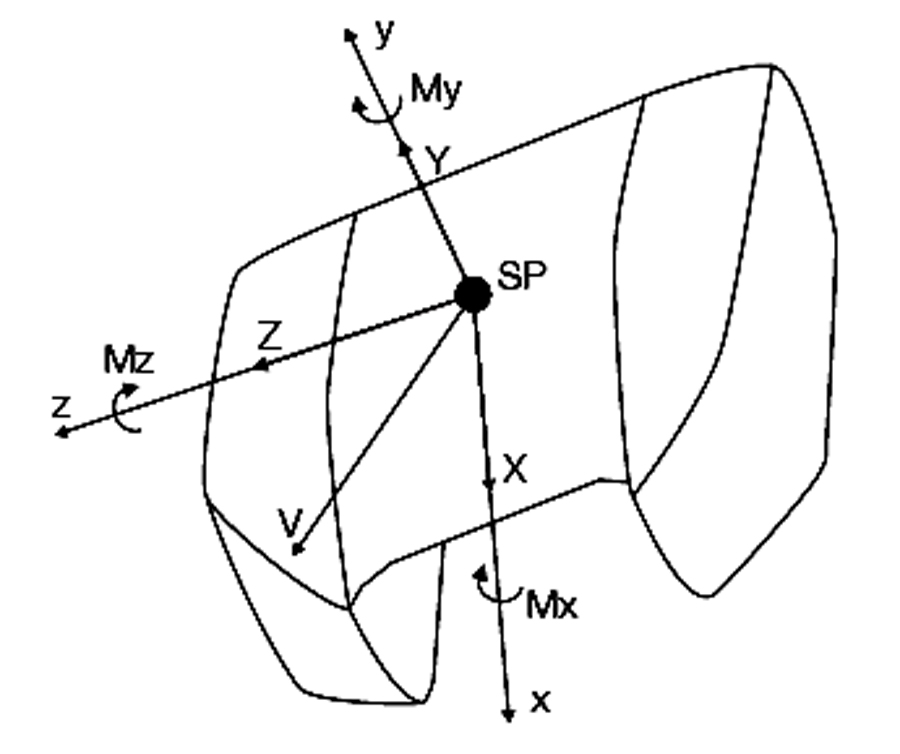
Figure 8 – All 'Dynamic Forces' must be identified and included in analysis, oriented about 3D axes


Weight Distribution Matters...
The distribution of weight in your boat makes a difference to performance. Proper weight adjustments can improve or correct handling issues such as porpoising, chine walk and lower unit blowout. This is important for lateral (side-to-side) distribution.

Dynamic Balance is key... The same goes for the fore/aft static balance, although it's not as easy to know what is just "right" when the boat is at rest. You can't balance your boat on the trailer.


All of the lift & drag (hydrodynamic and aerodynamic), thrust and weight forces on a boat act in different locations - and the location of each of these forces is constantly changing. (This is why you can't effectively "balance" your performance hull while it's still on the trailer). All these different forces at their different locations combine into a net resultant force that acts at the dynamic center of Forces (CGFynamic) and represents the delicate balance of the performance hull.


Ideally, we'd like to have the resultant of these forces acting at the same location as the Static CG, to make the boat dynamically ‘stable’. Since the xCFDynamic location constantly changes throughout the velocity range, this makes the task of ‘dynamic balance‘ of the hull one of optimization. Moving weight around can help the boat's balance in a key velocity range, improving handling and response. The goal is to move weight so that static CG is closest to the xCFDynamic at the most common or most critical hull speeds.


Example Analysis of C_MCG, XCGDynamic & XCGStatic

As an example, let’s consider a small performance hull with total weight 1600bs and a calculated static CofG located at XCGStatic=4.5ft forward of the transom. This means that the weight (1600lbs) of the hull while at rest is centered at the static center of gravity located +4.5ft ahead of the hull transom [see Figure 6 above].

Based on the design and setup of this hull at 20mph, the calculated location of the center of dynamic forces (XCFDynamic) is approximately +7.8ft fore of transom. This is +3.2ft FORE of the XCGStatic location, and represents a 'bow-UP' moment of +5120 lb-ft. If we were going to try to ‘balance’ the hull at just this one velocity (20mph), then we would have to relocate the static CG location (XCGStatic) FOREWARD by…5120/1600 = 3.2ft FOREWARD from where it is now.


Alternatively, the calculated XCGDynamic location at 72mph is approximately +1.7ft fore of the transom. This is -2.8ft AFT of the XCGStatic location and represents a ‘bow-DOWN’ moment of -4480 lb-ft. If we were going to try to ‘balance’ the hull at just this one velocity (80mph), then we would have to relocate the static CG location (XCGStatic) AFTWARD by -4480/1600 = -2.8ft AFTWARD from where it is now.


The important thing to note with such analysis is that the static center of gravity (XCGStatic) of the hull obviously cannot be in two different locations. The important parameter to study for the performance of the hull is the Dynamic CofG (XCFDynamic), and XCFDynamic moves to different locations under all the different operating conditions of the boat. Thus, the hull can, at best, be ‘dynamically balanced’ at only one velocity. (If we were to move the static CofG to balance at 20mph, then the ‘dynamic balance’ at 72mph would be worse).


Many of the design features of a hull can influence the location of the Dynamic CofG (XCFDynamic) throughout the operating velocity range of the hull. The weight of many of the payloads of a hull can also be located so as to alter the Static CofG (XCGStatic). It’s best to try to locate XCGStatic and XCGDynamic as closely together as possible, and so as to minimize any dramatic changes in the shifting of XCGDynamic as it relates to XCGStatic.


An easy way to analyze just how “dramatic” the changes in shifting XCFDynamic is to plot a graph of the derivative of the XCGDynamic data…this is the “rate-of-change” of XCFDynamic…and is shown on the TBDP©/VBDP© graphic displays as the blue line on the chart. When this curve is increasing, this means that XCGDynamic is changing at a faster rate. This can indicate that the hull is becoming more unstable and may be more difficult for the driver to correct.) See more about “rate-of-change” graphic curves in Section 7.6.2 of the TBDP/VBDP manual).


Also considered is the 'direction-of-change' of the XCFDynamic location as velocity changes.  For example, if XCFDynamic is moving aftward as velocity is increasing, this movement generates certain stability characteristics (see Figure 4, above).  This same observation works in the opposite direction when velocity is decreasing. In the example (Figure 4, above), a deceleration or velocity decreasing will cause XCFDynamic to move forward, which may have detrimental handling and stability characteristics.


This example illustrates the “compromise” of the design process for performance powerboat hulls. A hull cannot normally be in ‘dynamic balance’ throughout its operating velocity range. So, the best approach for the designer is to attempt to locate the static CofG (XCGStatic) at a location that helps create the best ‘compromise’ of DYNAMIC BALANCE at most all speeds in the velocity range, paying particular attention to the speed regime that will be most utilized by the operators.


Research results now included in performance analysis by TBDP©/VBDP©

[more about AR's research     more about AR's publications    and    technical articles/papers]
 

jim2.jpg secrets_of_tunnel_boat_desi.gif

about Jim Russell

"Secrets of Tunnel Boat Design - Second Edition"
book
 "Secrets of Propeller Design" book

"TBDP Version 8" Software "VBDP Version 8" Software "PropWorks2" software

Order with your Shopping Cart
Special pricing updated February 15, 2026
Contact us at:
AeroMarine Research®
67 Highland Crescent, Cambridge, ON, Canada, N1S1M1
Tel: 519-240-7959

©Copyright by AeroMarine Research and Jim Russell, 1999, all rights reserved.
Material from this website may be not copied or used or redistributed, in whole or in part, without specific written consent of Jim Russell or AeroMarine Research®.